
Overview of the Project
Global Crossroad's volunteer opportunities to teach English in Costa Rica offer many ways to explore day-to-day Costa Rican life while helping young students improve their Basic English or conversational skills. Work includes teaching English (grammar, vocabulary, pronunciation, speaking, writing, listening, etc.) to students from pre-school to high school for 2-4 hours per day. At these projects, volunteers work with and assist the fulltime teacher. You will help teach regular English classes and also tutor the children and help them with their homework.
The schools in Costa Rica are closed for 2 weeks in July and in December to January. Volunteers in July will teach in school's extra classes, while the project will remain closed in December and January.
Role of Volunteer
While teaching English in Costa Rica, you will teach from 3 to 5 hours each day, 5 days a week. In Costa Rica, each school has its own on staff English teacher who assists our volunteers with teaching methods, offers advice on solving communication barriers and provides suitable curricula for the classrooms. English teaching volunteers do not have to be native English speakers. Volunteers interested in teaching other subjects like math, science can also do so, but please let us know this before you start your project. The schools in Costa Rica are closed during the holidays and exam periods. During these times, Global Crossroad will organize alternative tasks for our volunteers, such as assisting in an orphanage.

- Program: Volunteer in Costa Rica
- Project: Teaching English in Costa Rica
- Start dates: 1st and 3rd Mondays of each month
- Location: Atenas, San Jose
- Departure and End Point: San Jose International Airport (Juan Santamaria)
- Language Need: Fluency in English and basic/intermediate Spanish fluency
- Accommodation and meals: Host Family and Costa Rican meals three times daily
- Activities: Teach English to elementary school children
- Working hours: 20-35 hours per week
Skills/Qualification Needed
There are no specific qualifications needed to join our volunteer English teaching in Costa Rica project beyond a fluency in English and a preferred basic/intermediate fluency in Spanish. If you cannot speak Spanish, we recommend enrolling in our Spanish Language Studies program. Volunteer teachers should have strong English fluency, both written and verbal, yet no previous teaching experience is required. Volunteers should have a love for teaching, English and conversation. Volunteers should be enthusiastic, reliable, flexible, patient and strive to be good role models for the children.
Major FAQs- Teaching English Project Atenas
What does the usual daily program look like for the English teaching project?
The English teaching volunteers in Costa Rica – Atenas, can either be placed in schools or in community centre. The school program will be 7am-2pm, although this can vary depending on the specific school you'll be working for. Within the community centre, the usual schedule is: 9am -12pm and 2pm -6pm.
Where are the volunteers going to live while volunteering for this project? What are the commuting options? What's the distance between project location and home stay?
All English teaching volunteers in Costa Rica will stay in host families. The commute depends on the location of your assignment. The volunteers for the community centre will only have to take a short walk in order to arrive. The volunteers for the schools can either take a bus ride ($1/ way) or take a walk to the project location.
What's the school called, that I'll work in?
There are 15 schools in the project and it depends on the school administration. All specific details will be in the placement info you'll receive.
How old are the kids I'll work with?
Ages for the school project: 6-12 years old. Some school also have kindergardens.The community centre will provide classes for students: ages 3 – adults.
How many pupils are there in a class regularly? How many are there in the whole school?
This depends on the specific placement. A school can have between 50-600 students. A class is usual for 20 pupils. The community centre classes will be rather small, even one-on-on.
Am I going to be in sole charge of teaching or how does it work?
The volunteers in schools will be assisting a local English teacher, whereas the English teaching volunteers in Costa Rica community centre will be in sole charge of their lessons.
What is the number of daily hours that volunteers will work?
Usual working hours for the disadvantaged children project in Thailand are between 9am-3pm. You'll spend the mornings working with the children and the afternoon with community development assistance.
Is there a set curriculum?
There is a set school curriculum. The community centre classes will be designed by the volunteers to correspond to the needs and level of English their students have.
How many daily working hours does the project imply?
This is dependent on the particular placement. We encourage volunteers to be open-minded and flexible and engage in the needs of the projects.
Are the volunteers expected to bring any auxiliary teaching supplies?
It is not necessary, seeing how both school and community centre provide the needed supplies. However you are free to bring any auxiliary materials you see fit.
Is this project available throughout the year?
All schools are closed from December to mid-February. The community centre closes mid-December until the second week of January.
Are there any details you'd like to share with volunteers?
All volunteers for this project must provide a police report, proving they have no criminal record. The school will not agree with underage volunteers.
Major FAQs- Teaching English Project San Jose
What does the usual daily program look like for this project?
3-4h/daily are custom. The English teaching volunteers in Costa Rica will work mornings or afternoons from Mo-Fr and will participate in Spanish classes when possible.
Where are the volunteers going to live while volunteering for this project? What are the commuting options? What's the distance between project location and home stay?
The project locations are in and around the city of San Jose. The commute can vary between 20'-90'. It has proven to be easiest to use the local bus in order to get around in San Jose ($0.75/trip). Taking a cab is also an alternative, but surely more costly than the public transportation alternative. The commute may mean taking up to 3 buses in order to get to your home or your project location so we kindly ask our English teaching volunteers in Costa Rica to be flexible and open-minded about this. For your first trip, a local representative will accompany you, in order to show you how to get round and about.
What is the school I'll volunteer at, called?
All details will be handed to you upon your arrival at the airport, by your airport pick-up
How old are the students?
The English projects provided are available to all ages. They focus on integrating the use of English language in practical activities and cultural events. There are some projects for adults as well. WE kindly ask our volunteers to be open to help out for other on-site activities.
If you have a specific age group you'd like to work with please indicate this in the registration process.
How many pupils will there be in a class? How many students are there in a Costa Rica school?
English teaching volunteering in Costa Rica will have you teaching differently sized groups. Projects can work with 15-200 students. This depends on the project size and the number of existing staff
Are volunteers expected to take on the classes by themselves or will they be assisting teachers?
The projects mainly focus on impoverished communities and the courses are taking place in a school, church or community centre. The people who'll benefit from this projects come from low income families who couldn't study English in any other way. Please consider the fact that you might enter a understaffed, not organized and scarcely funded environment where there won't be a traditional classroom as you might expect it. English teaching in Costa Rica volunteers should be open-minded and flexible.
Is there a set curriculum?
There is no set curriculum. We will provide you with materials, books, lesson ideas and a 'english teaching crash course'.
What's the number of daily working hours I'll work?
3-4h/daily are custom. Volunteers will work mornings or afternoons from Mo-Fr and will participate in Spanish classes when possible.
Can I apply for this project all year long?
Yes you can.
Are there any details volunteers should know about before applying?
Personal Appearance
Please bear in mind that volunteers for English teaching in Costa Rica must have a clean and responsible appearance all the time: you'll have to cover your shoulders and knees, and wear no extravagant clothes. Piercings should be removed and tattoos covered.
Criminal Background Check
All volunteers must show a criminal background check provided by their local police department. Background check older than one year of program start will not be accepted.
Maximize Your Experience
We recommend our volunteers to be open-minded and pro-active, ready to pitch in whenever its needed, since a continuous presence and appreciation of the schedule and situation will allow the involvement you'd expect. The language and culture barrier must be taken into consideration as well as the lack of funding that the structure you'll volunteer have. The placements will be busy, Spanish speaking environments where any help is highly appreciated.
Volunteer in Costa Rica : Project Locations and Free Time Options
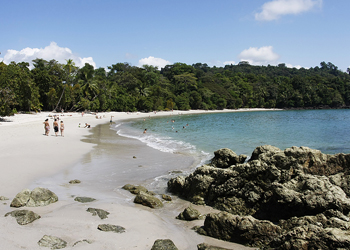
The project is located in San Jose and Atenas. During the program, volunteers will have plenty of free time in the evenings and on weekends. While Global Crossroad does not specifically arrange activities during volunteer free time, our local staff can provide free advice, travel tips and assistance in making suitable travel arrangements in Costa Rica. Volunteers will have the chance to immerse themselves in a new culture and explore Costa Rica. This experience will be educational and a time for personal growth.
Atenas is located about 41 kilometers (25.5 miles) from San Jose in the central Valley and sits at an elevation of 698 meters above sea level. It is a small town of about 5 thousand people and is popular with a lot of American expats, who stay there permanently. The temperature in Atenas averages in the mid-70s year-round, but there will be few warmer nights and few evenings when it might dip below the 60s. In the rainy season, late afternoons are wet but mornings are mostly clear. From Atenas, the views of the surrounding coffee and sugarcane plantations as well as forested valleys are very beautiful.
There is a central park located at the heart of the town. The park is a perfect place to relax and enjoy ice cream or coffee. Cafes and restaurants located within the park serve some of Costa Rica's delicious cuisine including the toronjas rellenas (stuffed grapefruits), which are a popular local dessert. Nearby shops and markets are very good places to purchase souvenirs such as handcrafted jewelry or traditional Costa Rican clothing. Located just east of Atenas, volunteers can also visit La Garita. It is to home to Zoo Ave, a wildlife rescue and breeding center, and also has a plant nursery nearby that sells exotic plants. On weekends, volunteers can travel to Pacific Coast or further away to visit National Parks and Caribbean Coast. A trip to San Jose, the largest city, is also recommended.
San Jose is the capital of Costa Rica, and it is situated in the Central Valley. Whether you like fantastic natural views, history, restaurants or adventure tours – San Jose has it all. This popular city is the largest in Costa Rica and it a wide variety of museums and parks and plazas that feature green recreational areas, lakes, picturesque gazebos and numerous types of flora and fauna. San Jose's main tourist draw is its renowned theatres that have European-inspired architecture and numerous musical, artistic and cultural activities and shows. Annual festivals and events in the heart of San Jose also draw large crowds throughout the year. Volunteers will have the choice between staying with well-screen local host families or in apartment-style rooms. Both are located close to all of San Jose's main areas.